
The Hull truth and nothing but...
Take two ships that are almost 100% identical, there difference only is how thick their hulls are. 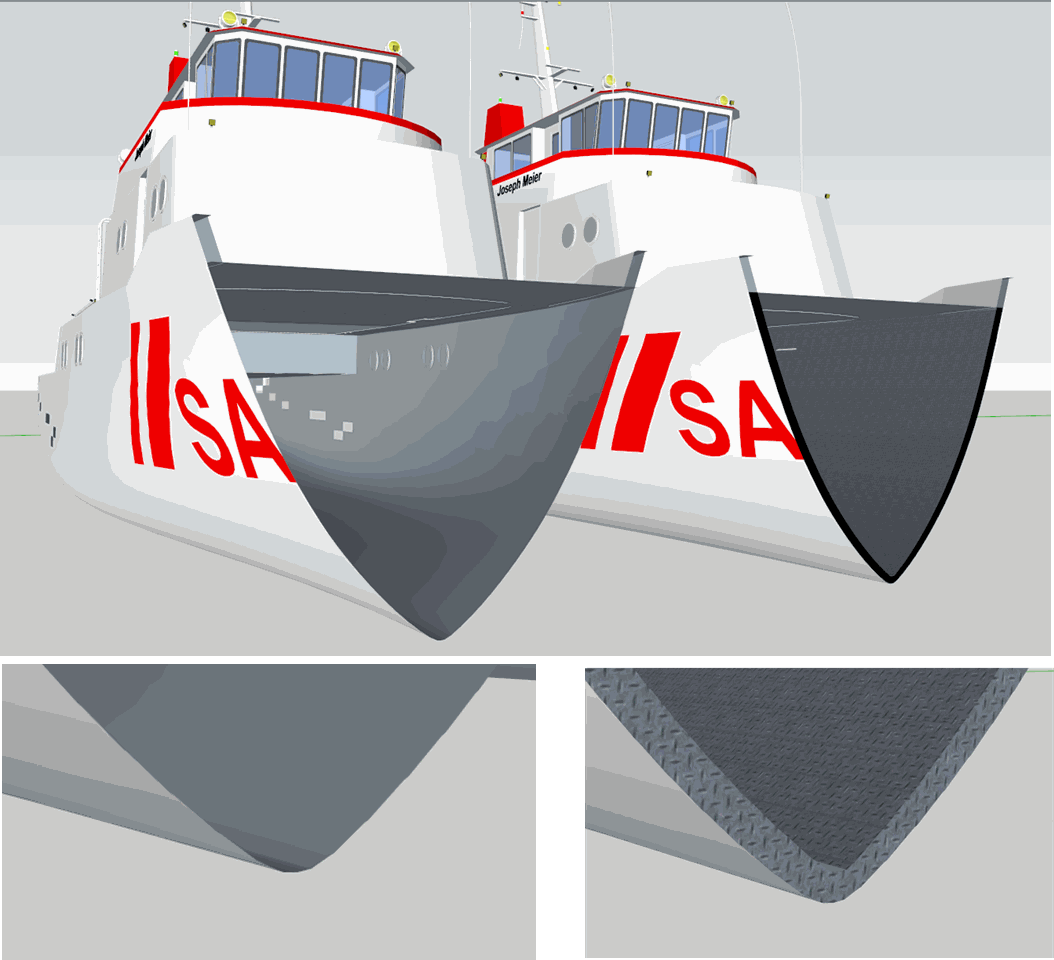
- One ship has a 1/4" thick hull
- One ship has a 2' thick thick hull
Both ships are at sea and a test will be performed.
Someone will punch a 2'x2' hole into both hulls in the same exact spot on each ship.
Which floats the longest ?
Which Sinks the fastest ?
Why is it that they both sink nearly at the same rate ?
Now imagine the hull is the insulation in your walls, and the water is heat.
R-value
- R value = resistance to heat
- The over all effectiveness of insulation is largely dependent on the poorest performing areas.
Heat travels across all walls, we have not developed heat proof walls.
The ships hull is always leaking.
The equipment and energy your using to keep your home comfortable is analogous to the bilge pumps and power needed to empty the hull.
Continuous exterior insulation covering over all of the holes in the ships structure is tremendously more effective than trying to patch from the inside.
How does insulation resist heat ?
Most do so by trapping tiny air pockets. Still air is not a good conductor of heat, as there is quite a large amount of room between the molecules.
Measuring R value
- Over all R value. Needed for heat loss calculations.
- Because a typical wall or ceiling has framing and cavities with different R values heat travels across these paths at different rates.
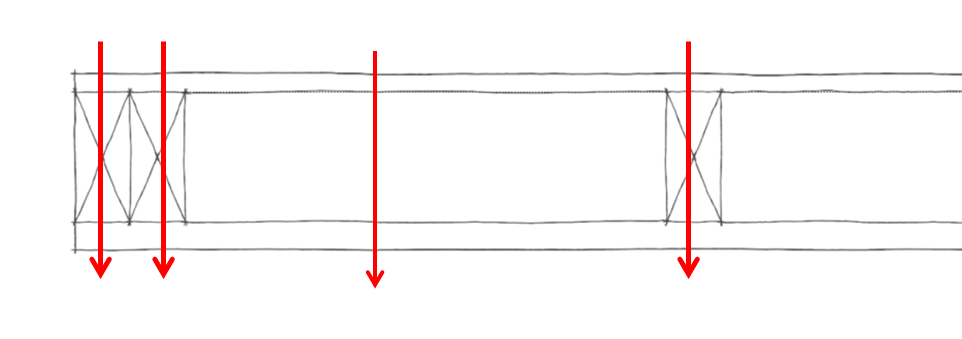
- You can add R values as long as the layers of material never change. Once there are different materials, or different paths, you have to perform a UA calculation.
- To measure over all R value of a building with studs, windows and insulation you must calculate the Area Weighted R value.
Area Weighted R value
R values cannot be added without converting the R value to its U value.
Simply divide the R by 1 to convert to its U.
Example; If you had R4,
1 / R4 = U 0.25
Then the area your working on needs to be multiplied by the U to it to get the UA
Now you can simply add the UA's,
Divide the total area by the UA to convert to an overall R
Wall with no studs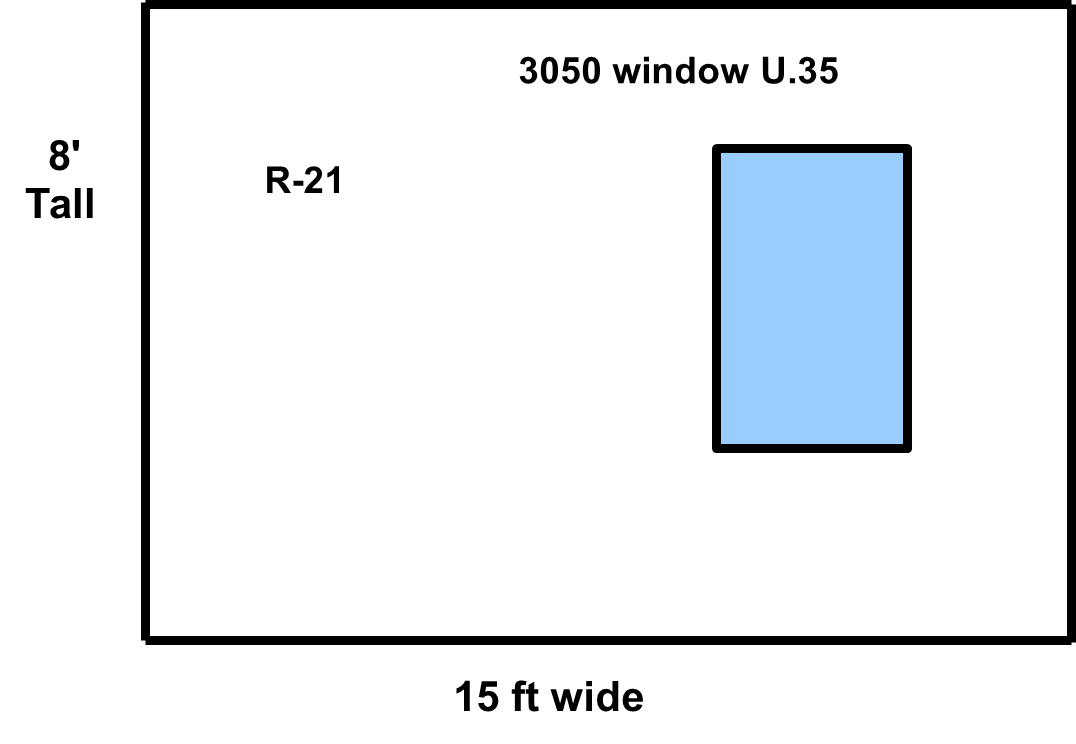
- 8x15= 120 sq ft
- 3x5 = 15 sq ft @ U.35
- 15 * .35= 5.25 UA
- 120 - 15= 105 @ R21
- 1/21= 0.047 U
- 105 * 0.047= 5 UA
- Add UA values 5.25 + 5 = 10.25
120 / 10.25 = R 11.7
Wall with Studs
- 8x15= 120 sq ft
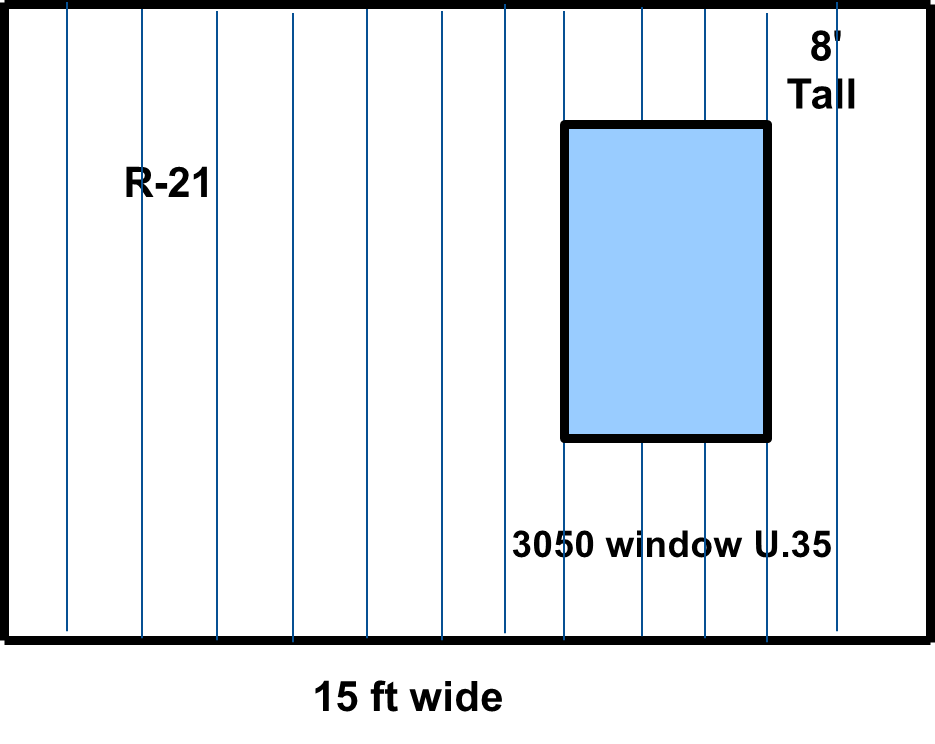
- 120* 23%= 27.6 (Framing Factor)
- 1/5.5*27.6= 5.01UA
- 3x5 = 15 sq ft @ U.35
- 15 * .35= 5.25 UA
- 120–15-27.6= 77.4 @ R21
- 1/21= 0.047 U
- 77.4 * 0.047= 3.63UA
Add UA values
- 5.01 + 5.25+3.63 = 13.89
- 120 / 13.89 = R 8.63
Your R-21 wall, with a window, is really acting like a it has an over all R value of 8.6!