
Loss from conduction and convection
What good is knowing the over all R value OR CFMn ?
Using R value or CFMn and the temperature difference, you can calculate the BTUS needed to maintain temperature during design conditions.
- Q/Hr = U x A x ΔT (Heat loss by conduction)
- Q/Hr = CFMn x 1.08 x ΔT (Heat loss by mass air transport)
Example Loss by Conduction (Using the wall area and R value reviewed earlier)
- Q = 1/8.63 x 120 x 53
- 737.7 BTU’s per Hour = .116 x 120 x 53
Example Sensible Loss by transport
(Using 7 ACH50 2,200 Sq Ft house reviewed earlier)
- Q= 133 x 1.08 x 53
- 7,613 BTU’s per Hour = 133 x 1.08 x (70 x 15)
Q/Year = CFMn x 1.08 x 24 x HDD x .75
1.08 is the amount of heat 1 cu ft of air will hold
Heat content of fuels
If you could squeeze every BTU to the home, without any losses...
- # 2 Fuel Oil 139,000 per gal.
- Propane 92,000 per gal.
- Natural Gas 100,000 per Cu Ft
- Electric 3,414 BTU’s per 1 kWh (resistance)
- Wood 15-20 Million per Cord
Price for 1,000,000 BTU's Delivered to your home.
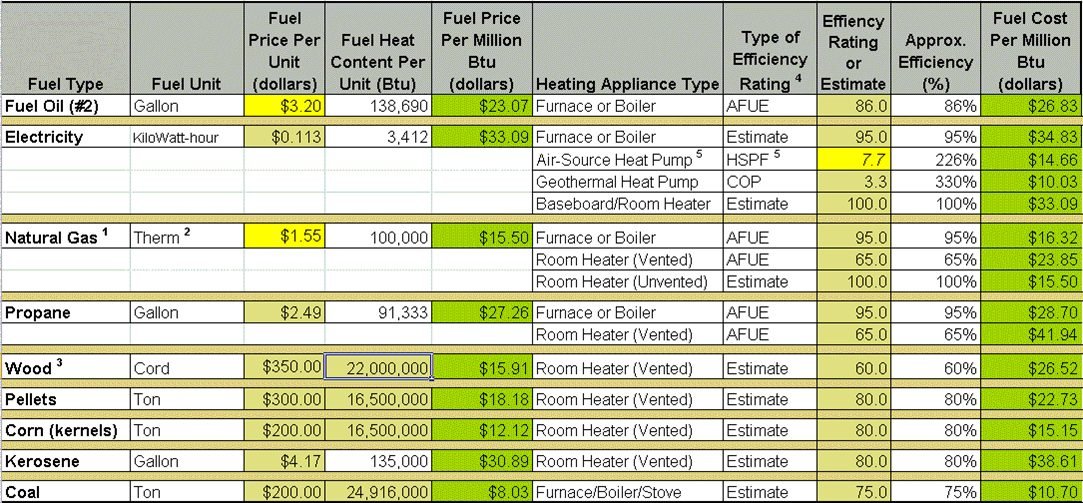
For most fuels, The BTU’s Available are impacted by Combustion EFF and AFUE
Heat Loss @ 7ACH50
Which type of heat loss effects a home the most?
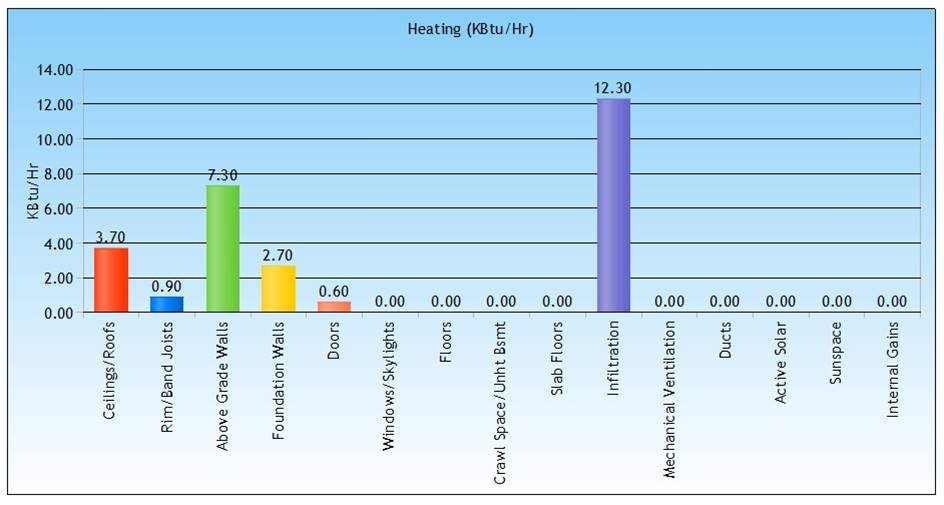
2,200 Sq Ft home at 2010 NYS ECCC infiltration
Heat Loss @ 3ACH50
Which type of heat loss effects a home the most?
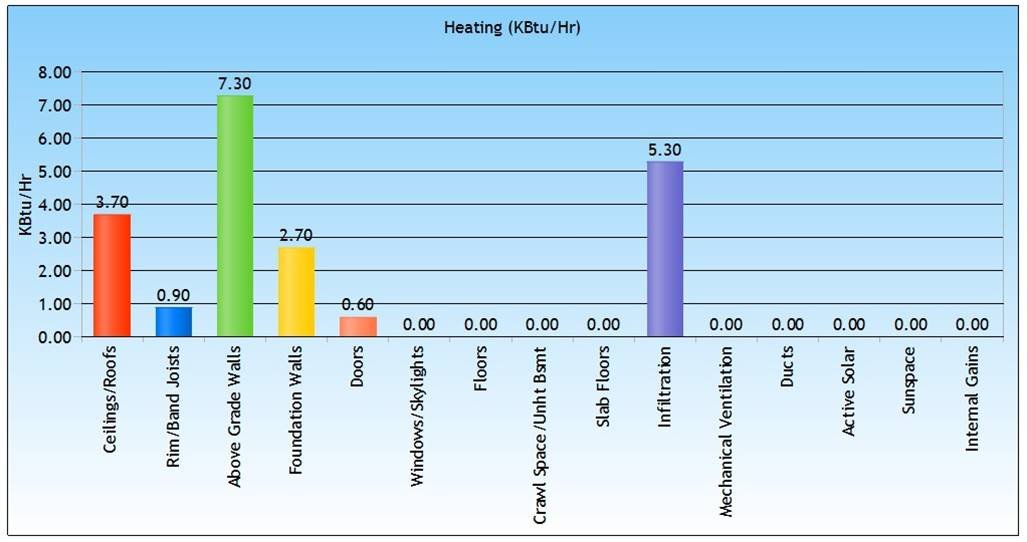
2,200 Sq Ft home at 2015 IECC infiltration
Heat Loss @ .6ACH50
Which type of heat loss effects a home the most?
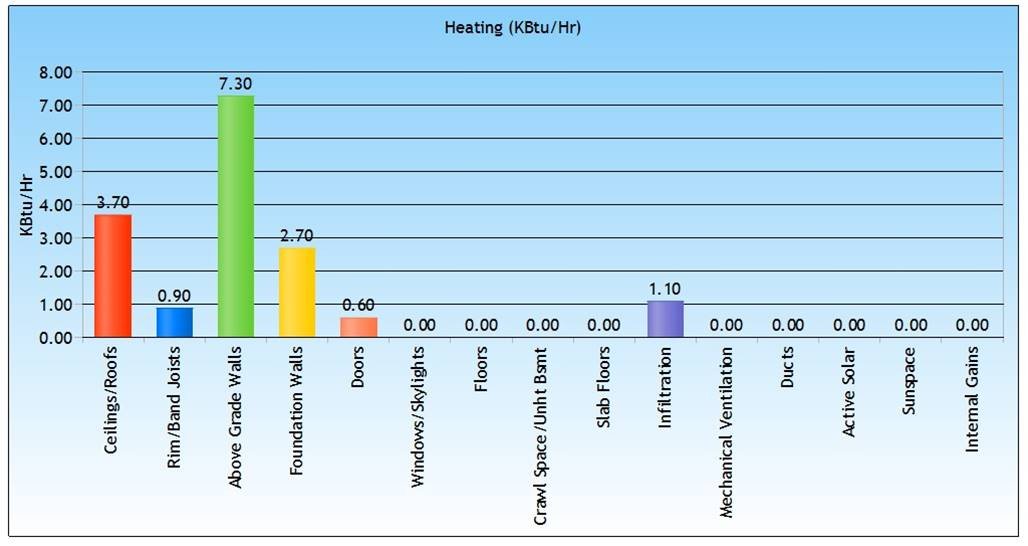
2,200 Sq Ft home at Passive house infiltration